
How Much Does Hot Water System Installation Cost?

Written by Richie Foster
Founder, licensed plumber

Replacing or upgrading a hot water system is one of the bigger plumbing decisions you'll make, whether you're swapping out a failing unit, sizing up for a growing household, or moving to something more efficient. Knowing what the installation actually costs is a big part of getting it right.
Prices in Australia vary a fair bit, because the type of system, your household size and your existing plumbing all feed into the up-front product cost, the labour, the site access and the ongoing running costs. By the end of this guide you'll have a clear picture of how to choose the right system, what installation might cost, and what to look for in whoever does the work.
Choosing the right system for your home
There's no one-size-fits-all with hot water, which is why it pays to look at your household size, daily usage and energy preferences first. A family of four with two bathrooms needs a bigger, faster-recovery system than a single-person home. Climate plays a part too, with colder areas needing more output to hold a steady temperature.
If you've already got gas connected, a gas system is often the most economical over the long run. For homes with limited space or no natural gas, electric or continuous flow can be more practical. Solar is a strong option if you want to cut energy bills and you may qualify for rebates, but it needs the right roof orientation and enough sun through the day. Working out your usage patterns and checking what energy connections you've got are the first steps to a cost-effective, reliable choice.
How size affects cost and performance
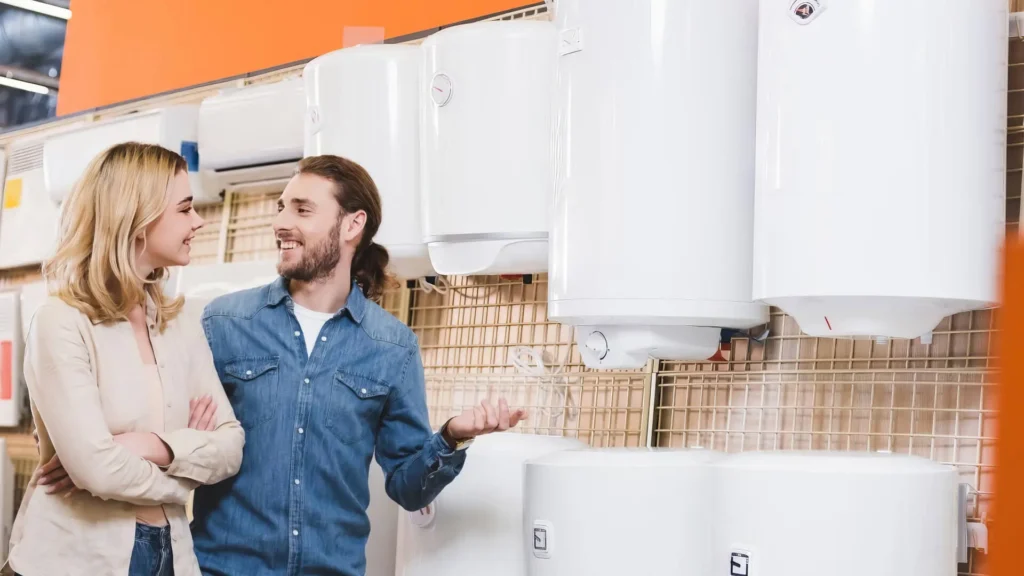
Systems are rated two ways: storage by volume, continuous flow by flow rate. A bigger tank or a higher flow rate lets multiple taps or showers run at once without the temperature dropping, but it costs more up front and uses more energy. A smaller system is cheaper to buy and run, but if it's undersized it'll reheat constantly, which is inefficient and wears the unit out faster.
Storage systems generally run from 25 to 400 litres. A two-person home usually needs around 125 litres, while a family of five will likely want at least 250. Instantaneous systems are sized on how many fixtures might run at once rather than headcount. Getting the size right avoids paying for capacity you'll never use, without leaving you short.
The main types of system
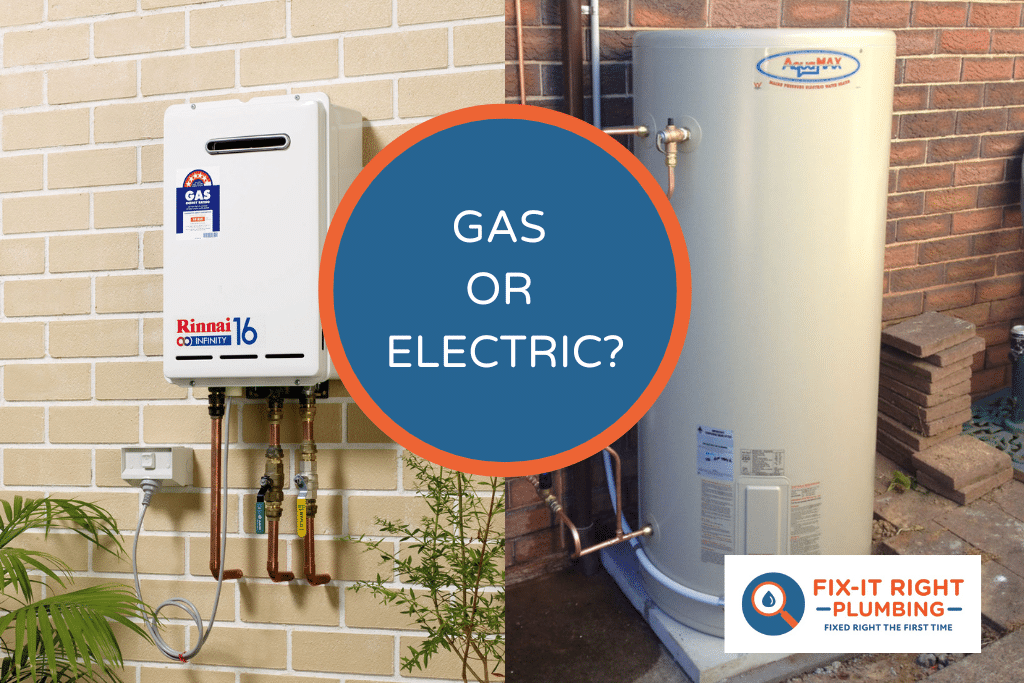
There are four main types to consider, each with its own install cost, running cost and best fit.
Electric. Usually the cheapest to install, especially on a like-for-like swap, and easy to mount indoors or out. The trade-off is higher running costs on standard tariffs and lower efficiency than the others.
Gas. Faster heating and generally lower running costs than electric, provided you've got a natural gas connection. Both storage and instantaneous options are available, with instantaneous giving you continuous hot water on demand.
Solar. The highest install cost but the lowest ongoing energy use. It needs roof space for collectors and a gas or electric booster for low-sun days. Victorian homeowners may qualify for rebates that offset some of the cost.
Heat pump. Efficient and eligible for rebates in some regions. It pulls heat from the air to warm the water, which cuts running costs, though it can be a bit noisy and less effective in very cold weather.
Brands and quality
Not all systems perform the same. Established brands like Rheem, Rinnai, Bosch, Dux, Thermann and Stiebel Eltron offer proven durability, good after-sales support and strong warranties, with some built specifically for Australian conditions, including faster recovery and corrosion resistance for coastal homes. Cheaper brands can save money up front but often fall short on lifespan, efficiency or ease of repair. Compare warranties, efficiency ratings and real reviews before you buy.
Delivery and site access
There are extra costs once the unit's bought. On top of delivery and installation, some sites need more labour or equipment to get the new system into place and finish the job safely. To avoid surprises, raise any access concerns when you ask for a quote. A site inspection beforehand helps flag issues early so the quote covers all the equipment, time and labour.
Installation and labour
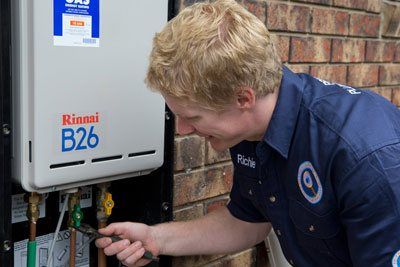
Plumbers typically charge between $80 and $120 an hour, with installation taking two to six hours depending on whether it's a simple like-for-like replacement or a more involved upgrade. Systems with electrical parts, like solar boosters or electric tanks, may also need an electrician at a similar rate.
Switching from electric to gas, or putting in a continuous flow unit where there wasn't one, often means new plumbing lines, venting and compliance checks, which adds cost. Australian Standards also require certain parts, like a tempering valve or a pressure-limiting valve, and these are mandatory additions if they're not already there. Ask your installer whether they're needed and included. The best way to see where the money goes is to ask for an itemised quote that separates the unit, materials, labour and any compliance parts.
Removing and disposing of the old system
Most plumbers remove the old unit as part of the job, but not all include disposal in the base quote. Disposal costs vary by location and system. Copper and steel components can be recycled, which can lower the cost, while damaged or non-recyclable units attract a full waste charge, usually $60 to $150. Always confirm whether that's included up front, because some treat it as an optional add-on.
Rebates and energy incentives
There are schemes that can take a chunk off the cost of an efficient system, and they change from time to time, so it's worth checking what's current when you buy.
In Victoria, the Victorian Energy Upgrades (VEU) program supports energy-efficient hot water systems like heat pumps and solar, with rebates that can cover part of the equipment and installation depending on the system and your home's usage. Nationally, the Small-scale Renewable Energy Scheme (SRES) offers Small-scale Technology Certificates (STCs) on solar water heaters and air-source heat pumps. Installers usually handle the paperwork and deduct the value of the certificates from your invoice. An accredited installer can confirm which rebates and certificates apply to the system you're considering.

Running costs
What a system costs to run depends on the energy source, your household size and the unit's efficiency. Up-front cost matters, but over the life of the system the running cost adds up to a lot more, so it's worth weighing both. Here's a simplified guide to estimated annual running costs for the common types.
| Water heater type | Annual energy cost (approx.) |
| Electric storage | $1,345 |
| Gas storage | $1,659 |
| Heat pump | $420 |
| Solar (with booster) | $900 |
Figures based on the Rheem running-cost calculator. These are a general guide only; your actual costs depend on your tariff, climate, system size and how much hot water you use.
Getting the best value
Good value is about more than the lowest up-front price. It comes down to matching the right system to your household, keeping running costs manageable, and getting the install done properly. A few things that help:
- Compare quotes. Get detailed quotes from two or three licensed plumbers, each covering the same scope so you're comparing like with like.
- Prioritise efficiency. A higher energy rating often costs more to buy but pays off through lower running costs.
- Check the warranty. Look for at least 5 to 10 years on the tank and key parts, and confirm the installer stands behind their workmanship.
- Ask about servicing. Regular maintenance extends the system's life. Find out what's needed and how often.
- Match size to demand. Size it to your household and peak usage to avoid paying for capacity you don't need.
- Check what's included. Some quotes leave out old-system removal or electrical upgrades, so ask for an itemised breakdown.
- Think ahead. If you're planning solar or a battery later, pick a unit that'll integrate easily.
Getting that clarity in the quote stops budget blowouts and nasty surprises down the track.
How we do it at Fix-It Right
We'll help you pick the right system first, then install it properly. We keep it simple: there's $0 call-out, we give you three written quotes so you can pick what suits your budget, and you'll always know the price before we start, itemised, with no surprises. If the number's a stretch, Fix-It Now Pay Later gives you 12 months with no interest and no repayments. Every job is backed by our 10-year workmanship guarantee, because the whole idea is to fix it properly the first time. Plumbing fixed for good, not fixed for now.
We install hot water systems across Melbourne, Geelong, Ballarat and Canberra. Need a hand with something else? We also do blocked drains and leak detection. Book online or give us a call.
Hot water system FAQs
How much does it cost to install a new hot water system?
Installation typically ranges from $1,000 to $7,000, depending on the type (electric, gas or solar), the size needed and whether it's a new install or a replacement. For a straightforward electric replacement, expect closer to $1,000 to $2,000. Solar sits at the higher end because of the equipment and the extra labour involved.
How long does a hot water system installation take?
Most take between two and six hours. Replacing an existing system with the same type is usually quicker; switching types or installing one for the first time takes longer because of the plumbing and electrical work.
Do I need a licensed plumber to install a hot water system?
Yes. Australian law requires a licensed plumber to install or replace a hot water system, and a licensed electrician if electrical work is involved. That keeps the install safe and compliant with local building codes.
What rebates are available for energy-efficient hot water systems?
You may be eligible for state-based rebates, federal Small-scale Technology Certificates (STCs), or incentives tied to energy-efficient upgrades, with extra rebates often available for solar or heat pump systems. Eligibility and amounts change, so check what's current for your area and system with an accredited installer.
How often should I replace my hot water system?
Most last between 8 and 15 years, depending on the model, how it's used and how well it's maintained. Signs it may be time include rust-coloured water, inconsistent temperatures, visible tank corrosion or frequent breakdowns. Regular maintenance helps it go the distance.