
Rinnai Hot Water System Not Working: Troubleshooting Guide

Written by Richie Foster
Founder, licensed plumber
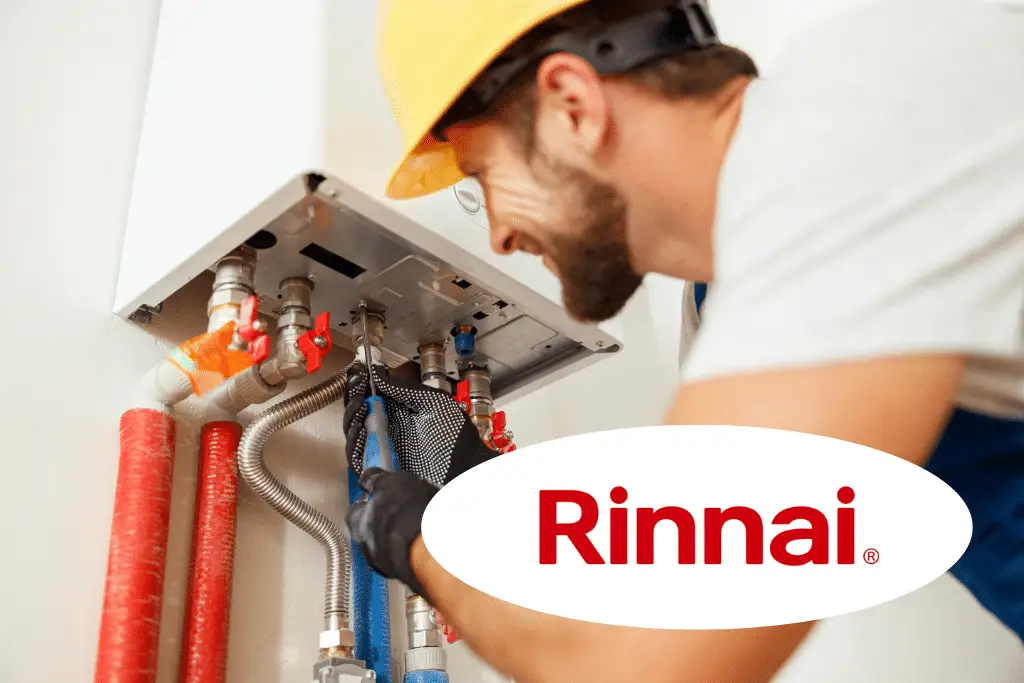
Rinnai hot water system not working? Rinnai has a solid reputation in Australia for reliable, efficient hot water, which is probably why you had one put in. Whether it's a continuous flow unit, a storage tank, a solar-boosted setup or a heat pump, a Rinnai is built to run for years without much fuss.
But every system hits a snag eventually, and when it does, knowing the right steps saves you time, stress and cold showers. If your Rinnai is on the blink, here's what to check yourself and when it's worth calling a plumber.
1. Start with the basics
Before you dig into anything detailed, rule out the simple stuff.
Power. For electric or heat pump systems, check the circuit breaker hasn't tripped. For gas units with electronic ignition, make sure the unit's plugged in and switched on.
Gas. On a gas system, check the gas isolation valve is open and your supply is active.
Water. Make sure the cold water inlet valve is open. If the system's been drained recently for maintenance, it needs refilling before it'll run.
Controller. If you've got a digital controller, check it's powered on, set to the right temperature, and not showing an error code.
2. Continuous flow and instant systems
On a Rinnai Infinity, B-series or similar, most faults come down to ignition, flow rate or temperature sensing. If you've got no hot water from a continuous flow unit, check that:
- The water flow is above the minimum needed to fire the burner (usually around 2 to 3 litres per minute).
- The showerhead or tap aerator isn't blocked and choking the flow.
- The gas isolation valves are open with no interruption to supply.
- The controller is on and showing the set temperature.
Still nothing? An error code on the display will point you at the fault. Common ones cover ignition failure (11), flame loss (12) and sensor problems (34).
3. Storage tank systems
On gas or electric storage tanks, problems usually trace back to thermostats, heating elements or relief valves.
- Lukewarm water often means a faulty thermostat or a failed heating element.
- On gas storage models, check for a lit pilot flame if yours has one, or the ignition status if it's electronic.
- No pilot flame, repeated flame-outs, or popping and banging noises can point to a gas control fault or sediment built up inside the tank.
If you're unsure, get a licensed plumber out to inspect it rather than guessing.
4. Solar and solar-boosted systems
Rinnai's solar models pair roof collectors with a gas or electric booster. Common issues include:
- Not enough sun with the booster switched off. Turn the booster on in cloudy weather or when demand's high.
- Air locks in the solar circuit stopping it circulating.
- Pump or controller faults stopping heated water moving from the collectors to the tank.
Solar systems also need a periodic service to check the pump, sensors and glycol levels where fitted. Skip that and the output drops off fast.
5. Heat pump units
Heat pumps are efficient, but they rely on airflow and the air temperature around them to work. A blocked air filter, a refrigerant leak or a faulty fan will all leave you short on hot water. If the unit's running but the water stays cold, the refrigerant circuit or compressor needs a professional look.
6. Instant and portable units
A portable or instant Rinnai playing up can be as simple as low gas pressure on a camping cylinder or a clogged inlet filter. Check the water and gas supply first, then clean the inlet filter if you can get to it.
7. Controllers
Modern Rinnai systems use wall controllers to set the temperature. If the controller's dead, check that:
- It's switched on and showing a display.
- The cable is plugged in firmly at both the unit and the controller.
- There's no corrosion or water damage around it.
If there's no display at all, try resetting the system. You'd be surprised how often that does the trick.
8. Resetting your unit
A reset will often clear a temporary fault. On storage models, the reset button is usually under the access panel near the thermostat. On continuous flow systems, switch off at the controller, wait 30 seconds, then restart. Only reset once or twice, though. If it keeps tripping, there's a real fault underneath that needs investigating.
9. When to call a professional
There's plenty you can check yourself, but some jobs need a licensed plumber or gasfitter. Call someone in if you notice:
- Error codes that keep coming back after a reset.
- Leaks from the unit or the pipework.
- A rotten-egg or sulphur smell, which can mean a gas leak.
- Water temperature jumping around and not matching the controller.
- Unusual noises from the pump, fan or burner.
How we do it at Fix-It Right
When a Rinnai does develop a fault, it's worth getting it looked at properly rather than patched. We work on every type of Rinnai, gas, electric, solar, instant, storage and heat pump, and our vans carry the common parts so we can get to the root cause, not just a quick fix.
We keep it simple: there's $0 call-out, we give you three written quotes so you can pick what suits your budget, and you'll always know the price before we start. If the number's a stretch, Fix-It Now Pay Later gives you 12 months with no interest and no repayments. Every job is backed by our 10-year workmanship guarantee, because the whole idea is to fix it properly the first time. Plumbing fixed for good, not fixed for now.
We service hot water systems across Melbourne, Geelong, Ballarat and Canberra. Book online or give us a call and we'll get your Rinnai sorted.